How accurate is it?
Our test of AI reading on museum boxes (2026-10-24). We publish what it could not read as well.
In short
- Item names (tea bowl, teapot, sweets bowl) were read on all 5 boxes. The maker’s art name (Seifū) was read on the 3 boxes the maker signed in clear writing. The Raku signature was only partly read, and one of its characters was misread in one run. Box T4 has no maker’s name (it was written by people who viewed the bowl).
- Decorative words in titles, long cursive notes and unusual name characters were often Unsure or Not readable.
- Only 1 of 9 seals was read. Seals need a close-up photo, and many still need a specialist.
- A “Likely” character was wrong once. Check every character marked Likely, Unsure or Not readable before you rely on it.
- Which generation of a hereditary name (e.g. Raku Kichizaemon) cannot be told from the box writing alone.
- This is a small test of 5 boxes photographed by museums, not a statistical accuracy rate. Phone photos with shadows or angles will read worse.
The five boxes
T1. Teapot with cherry blossoms, Seifū (Kyoto)
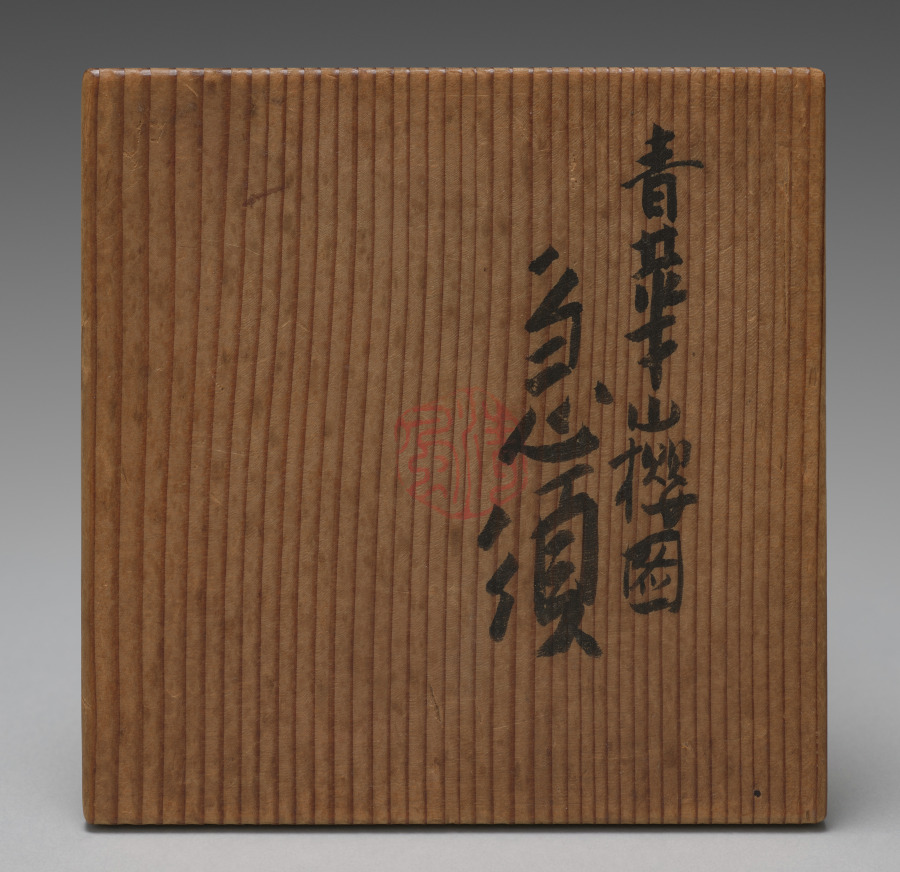
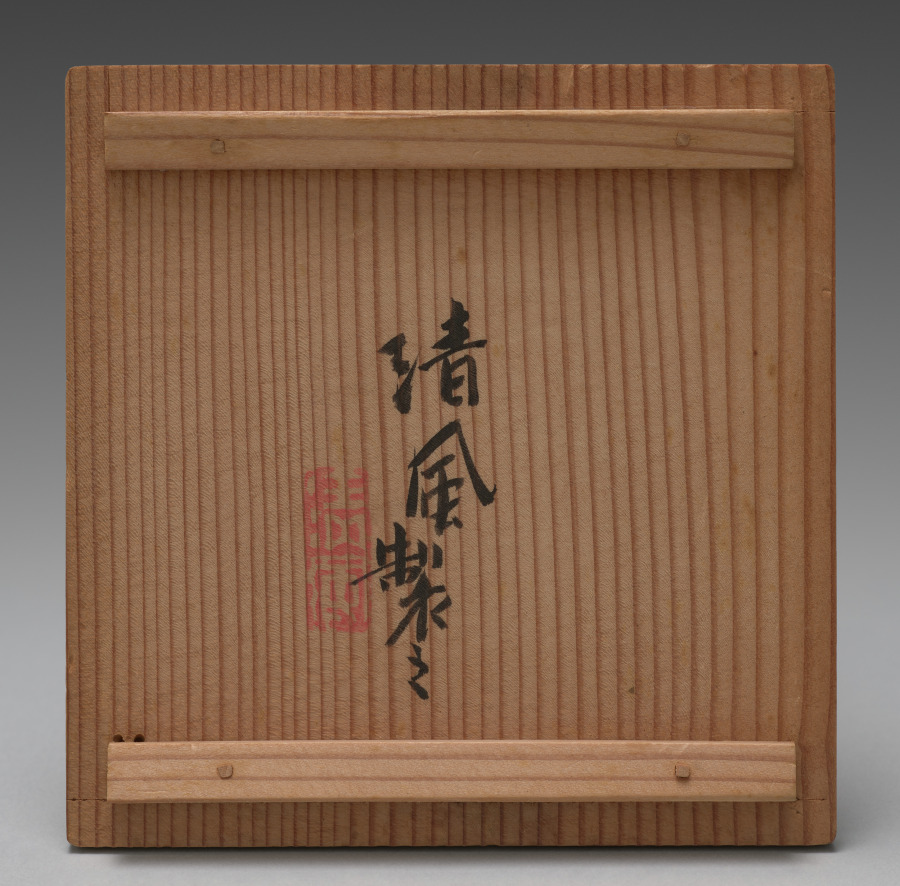
Museum record: Seals reading “Seifū” on top and inside of the lid.
Collecta Ledger (AI): Item: 急須 kyūsu (teapot), Likely. Title read as 青華□山櫻図 with two uncertain characters. Maker: 清風 Seifū, Clear; written by the maker. Both seals marked Not readable.
Result: Item and maker correct. Seals not read.
Image: Cleveland Museum of Art, Open Access (CC0), object 447718
T2. Sweets bowl, Seifū (Kyoto, Meiji era)
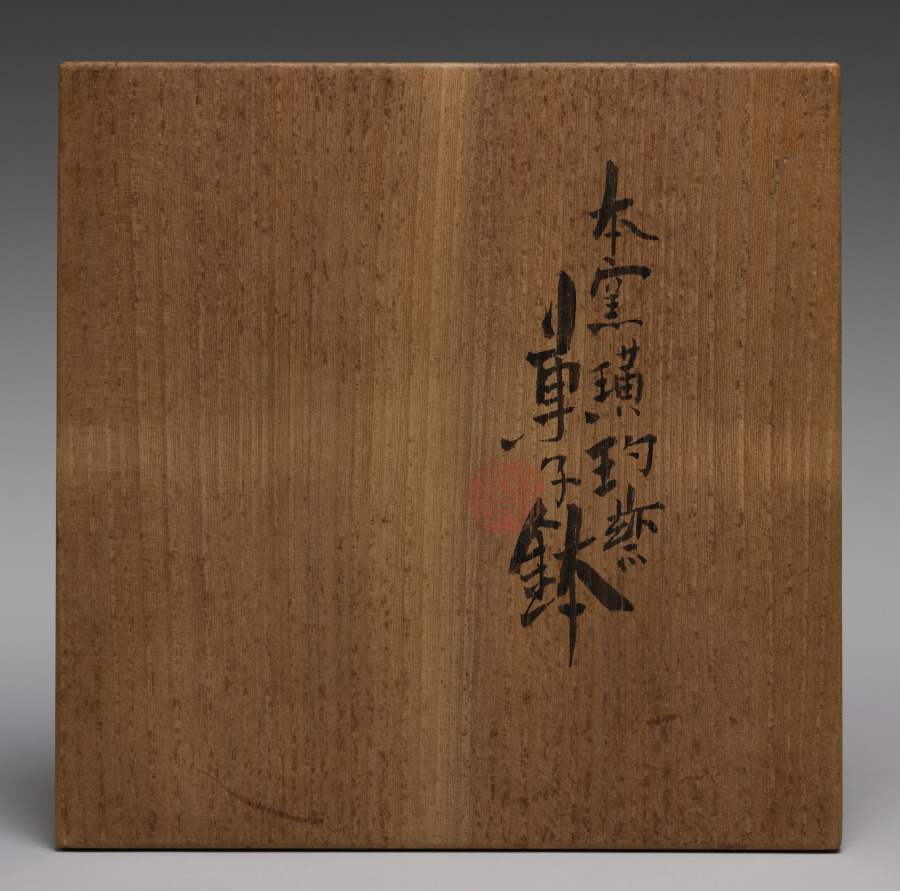
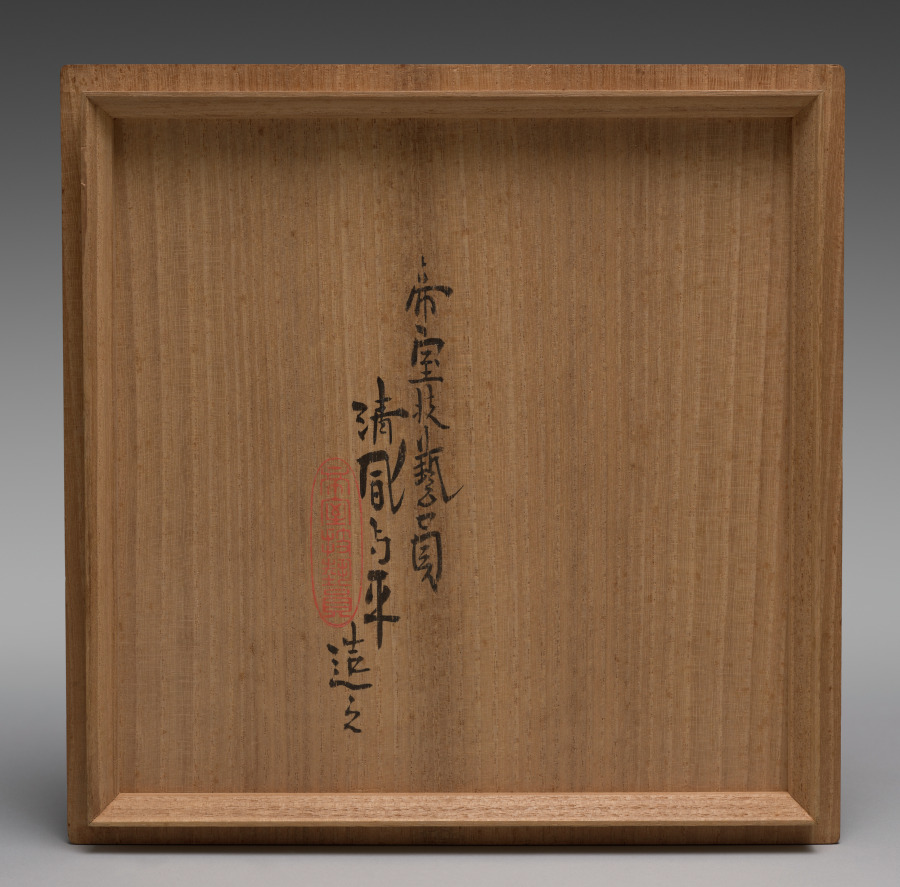
Museum record: Seal on the lid “kinsei gyokushin”; inside the lid, seal and inscription “Imperial Household Artist”.
Collecta Ledger (AI): Item: 菓子鉢 kashibachi (sweets bowl), Clear. Inside: 帝室技藝員 (Imperial Household Artist), Clear, and 清風与平造之 “made by Seifū Yohei”, Likely. Three characters of the lid title (glaze or decoration) Unsure with alternatives. Both seals Not readable.
Result: Item, honour and maker correct. Decorative title and seals not read.
Image: Cleveland Museum of Art, Open Access (CC0), object 447765
T3. Sweets bowl with chrysanthemums, Seifū
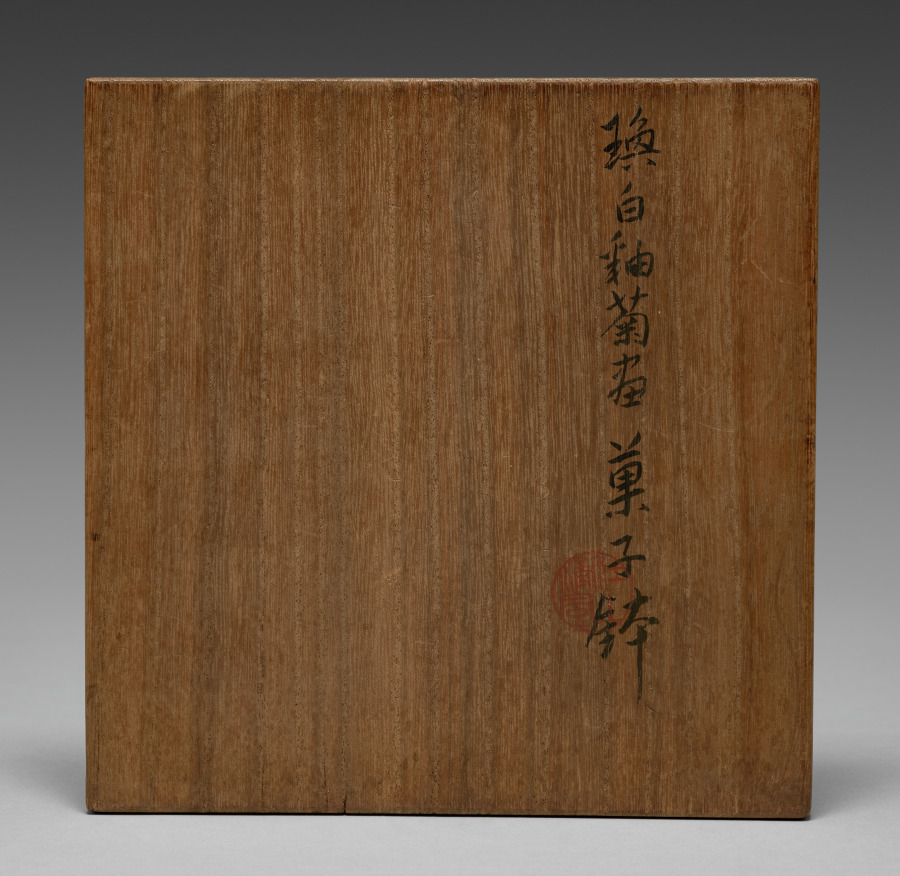
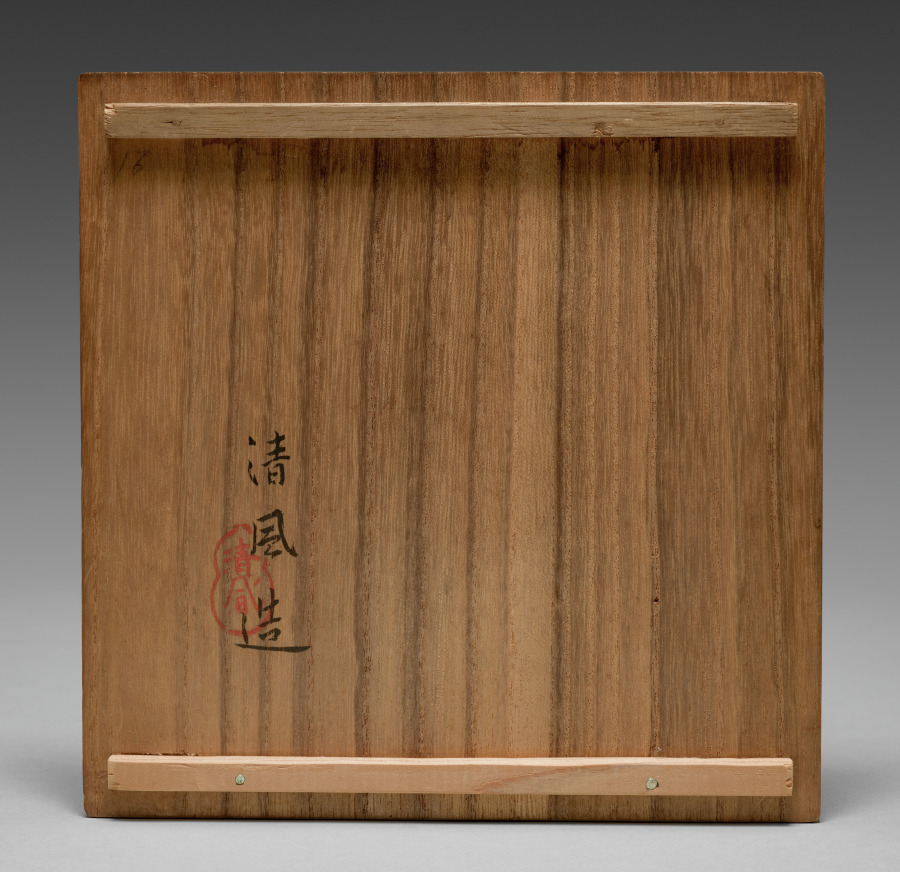
Museum record: Seal on lid top “Seizan Seifū”; inside the lid “Made by Seifū” and seal “Seifū”.
Collecta Ledger (AI): Item: 菓子鉢 with 白釉 (white glaze) and 菊 (chrysanthemum); two characters Unsure. Inside: 清風造 “made by Seifū”, Clear. Seals: first character of one seal possibly 清, the rest Not readable.
Result: Item, motif and maker correct. Two title characters and the seals not read.
Image: Cleveland Museum of Art, Open Access (CC0), object 447811
T4. Chinese bowl (late Ming) in a Japanese box written by two people
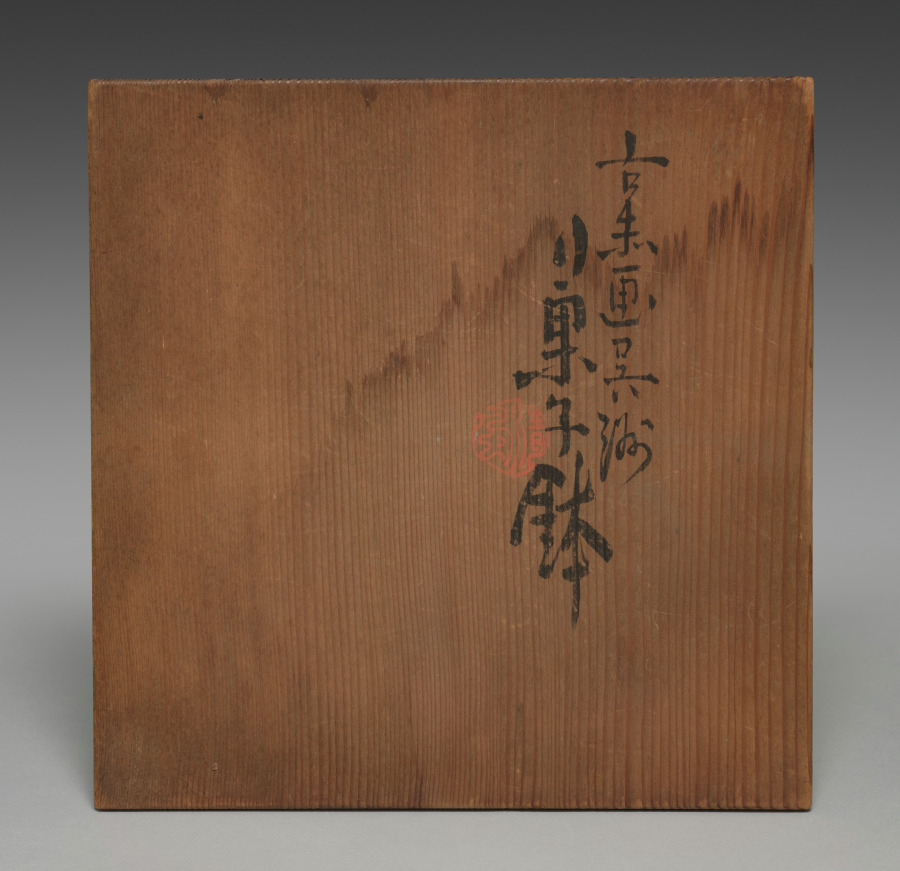
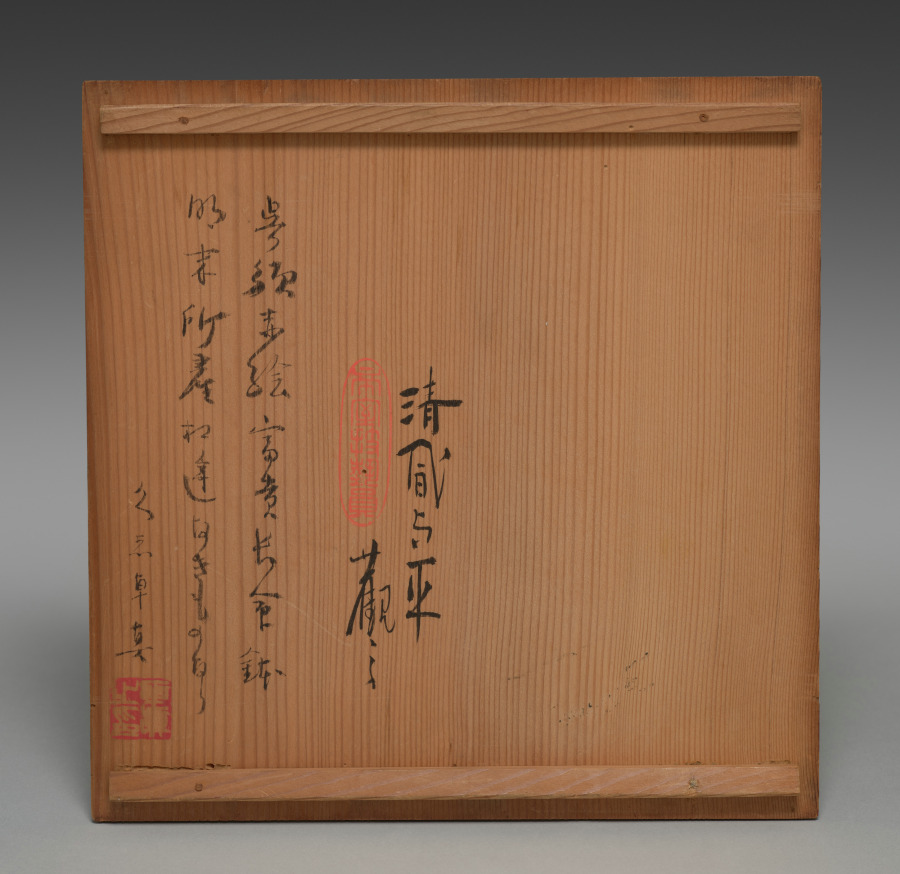
Museum record: Lid by Seifū Yohei III: a sweets dish from southern China with colour decoration. Inside: Seifū wrote that he “saw this”; a second note by Kushi Takushin (1898–1973) says southern Chinese red-painted ware, late Ming, signed Kushi Takushin.
Collecta Ledger (AI): Item: 菓子鉢, Clear. Ware: 呉須赤絵 gosu aka-e (southern Chinese red-enamelled ware), Likely. Writer: 清風与平 with 観之 “viewed this” — correctly identified as someone who viewed it, not the maker. Second note: “gosu aka-e … end of Ming” read; the signature read only as 久□□□□真.
Result: Item, ware, period and the viewer’s role correct. The second writer’s name mostly not readable; seals not read.
Image: Cleveland Museum of Art, Open Access (CC0), object 447838
T5. Red Raku tea bowl, Raku Kichizaemon VIII (Tokunyū)
Museum record: The maker’s own box (tomobako) of a red Raku tea bowl by the 8th generation, Tokunyū.
Collecta Ledger (AI): Item: 赤茶盌 red tea bowl, Likely. Seal 樂 Raku, read. Signature: in one run the first character was misread as 宗 at “Likely”; in another run read as 楽吉左… (Raku Kichiza[emon]), Unsure. The generation was not identified.
Result: Item and Raku seal correct. One character misread at “Likely” in one run. Generation cannot be told from the box.
Image: ColBase (National Institutes for Cultural Heritage, Japan), via Wikimedia Commons, CC BY 4.0 — image not reproduced here
What this means for you
Use Collecta Ledger for a fast first reading and to see exactly which characters need a specialist. Check every character marked Likely, Unsure or Not readable before you rely on it.
The legacy box-reading feature reads the writing on the box only. Portfolio estimates are a separate feature and do not guarantee sale proceeds. It is not an appraisal: it does not judge authenticity, age, quality or value, and a box may not belong to the item inside. AI readings can be wrong — characters marked Likely, Unsure or Not readable should be checked by a specialist.